
2026
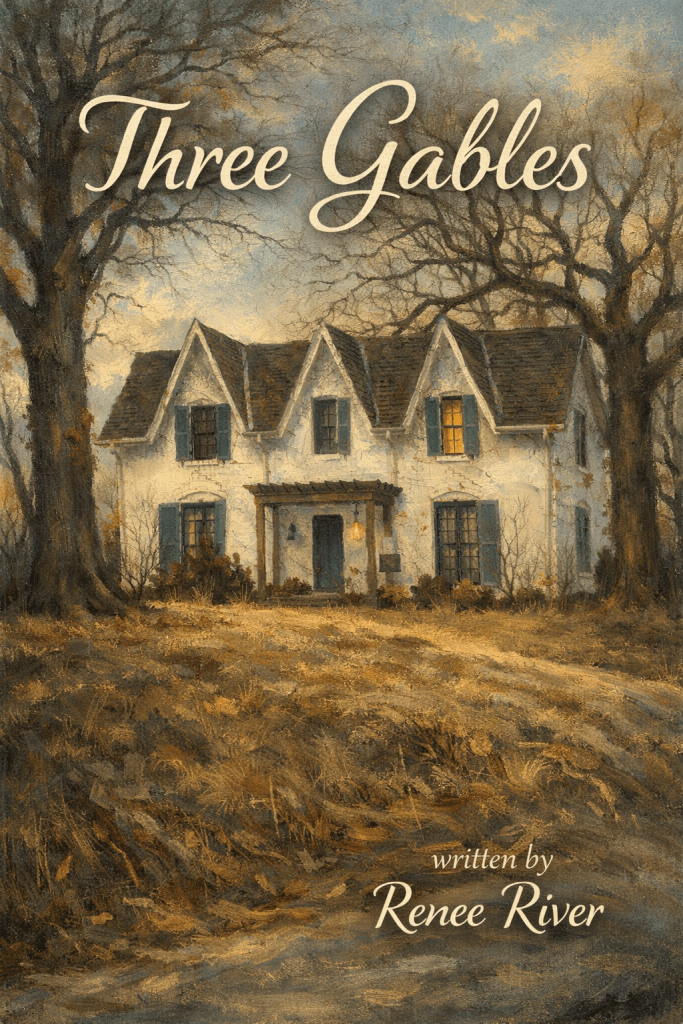
The house had three gables and the sagging posture of a woman who had survived something no one spoke about directly. A woman still standing, still trying, but tired.
It stood at the edge of her hometown in Missouri, on a large lot where older trees leaned close as if guarding it. The white paint had long ago surrendered to weather. The porch dipped in the center. One gutter hung loose like a tired arm.
Even so, she held her breath. She had always loved this old house.
Something about this house spoke to her.
Wren saw it again on a Tuesday afternoon while looking for a place to get her van fixed.
She had not come back to Missouri looking for a house. She had simply come to reclaim her life. To quit running. She needed to see her best friend and tell her the news, that her painting had sold.
It still startled her when she thought about it. The quiet, surreal weight of that sentence. Her painting sold. Not for fifty dollars. Not for polite encouragement. For enough that, after commission, she could breathe differently. Live differently.
She wanted to stop running.
She had told God that if this painting sold, she would put down roots. She would stand her ground.
The piece that sold had been called Exit Wound.
She had painted a woman turned slightly away. Spine visible. A thin crack down the center of her back lined in gold leaf. Not bleeding. Not broken. Glowing.
The gallery in Santa Fe had sent the email with the subject line: SOLD.
Standing at the diner counter of her last job, she stared at the phone in her left hand while reading the email in shock, the coffee pot in her right hand forgotten.
Life was about to change. She knew it.
Two years earlier she had left a man who told her art was a waste of time and her independence was betrayal. A man who never hit her where it showed. He preferred bruises in hidden places and words that destroyed self-esteem. Isolation. Erosion.
She left him one morning before he woke. No dramatic fight. No shattered plates. Just enough money in her pocket to run and never look back.
She had not stopped moving since. Town to town. Waiting tables wherever felt safe. Meeting new people. Moving on before anyone got too close.
Until the painting sold.
Until she came home.
Until she saw the house.
A crooked sign in the yard read:
CASH ONLY.
AS IS.
The price was low enough to feel dangerous.
Wren crossed the street before she could talk herself out of it and pulled into the long, wooded drive. She got out of her van and just stood there staring at it.
She had always loved this house.
The front door was painted a faded blue, the kind people once believed kept bad spirits out. She said a quick prayer. She needed that, she thought as she ran her fingers lightly over the wood.
The house did not feel abandoned.
It felt as if it were waiting.
For her.
1824
Margaret Hale stood on the same porch with a split lip and a plan sewn into her hem.
The house was new then. Proud. Her husband had built it as a declaration, Three Gables sharp against the Missouri sky, a statement of prosperity in a state barely three years old.
He was well admired in the community.
He was cruel at home.
Margaret learned the house’s sounds the way some women learned hymns. Which board betrayed weight. Which hinge complained. Where wind slipped through. The subtle warnings that told her he was coming her way.
In the pantry, behind a loose board, her husband kept coins in a tin.
Margaret pretended not to notice.
For months she slipped out one coin at a time. Never enough to be missed all at once.
She sewed them into the lining of her winter cloak.
The house watched her.
It had been built to hold a family. Instead, it held her quiet defiance.
———
Wren bought the house three days after she saw the sign.
The mechanic bill ate a chunk of her art money, and the closing papers were thin compared to the ones she had imagined signing someday. Cash transfer. Signatures. A handshake from a realtor who seemed relieved to be rid of it.
“It needs work,” he warned.
“I know,” she said.
He meant the foundation.
She meant something else.
The first night inside, she didn’t unpack much. An air mattress on the floor. A lamp. Her easel by the front window.
The house creaked as temperatures shifted.
Wren lay awake, listening.
She did not feel alone.
She did not feel watched.
She felt steadied.
The house strengthened her.
That surprised her.
She prayed, then slept.
——-
The email from the buyer came two days later.
His name was Caleb Rhodes.
Subject: Your Painting.
She almost didn’t open it.
But she did.
I don’t know who she is in Exit Wound.
But she looks like she’s turning toward something, not away.
I wanted you to know that’s why I bought it. It’s beautiful.
She read the second line three times.
Turning toward something.
No one had ever described her like that.
They wrote back and forth for weeks. Then he mentioned he was in Missouri recording a song for a studio outside Kansas City. He played drums.
He didn’t ask to meet.
He simply wrote, If you ever want coffee, I’d like to thank you in person.
She surprised herself by saying yes.
Caleb was broader in the shoulders than she expected, and quieter. The steady calm she didn’t know she craved.
He had drummer’s hands, strong wrists, well-shaped fingers. She wasn’t prepared for how drawn she felt to him. Part of her was scared of that.
He listened fully when she spoke. Didn’t interrupt. Didn’t rush to fill silence.
They met at a coffee shop downtown. He didn’t stare at her the way men sometimes did. He didn’t treat her like something fragile or tragic.
“I almost didn’t send that email,” he admitted.
“Why?”
“I didn’t want to turn the painting into a metaphor you didn’t mean.”
She studied his blue eyes.
“And if I did mean it?”
“Then I’m glad you survived it.”
He said it simply.
Not as pity.
As fact.
She didn’t respond. But something loosened in her chest.
———-
Margaret left in early spring.
The night air still bit with winter’s edge. She packed no dresses. No keepsakes. Only the cloak heavy with coins. She held a folded piece of paper she had written herself.
It was not legally binding. She knew that.
But she wrote it anyway.
If you are here alone, you are not the first. Stay. I give this house to you. Be strong. Do not let anyone frighten you again.
She tucked it inside the west gable wall, beneath a beam where wood met brick. A place only someone making repairs might someday find.
Then she walked away.
She did not look back at Three Gables.
She looked forward.
One day someone strong would claim this house, and stay.
Wren found the pouch while patching water damage in the attic.
The west gable leaked after a hard rain. Caleb had offered to help.
He climbed ladders easily. When she froze halfway up once, he didn’t ridicule her. He simply waited below and said, “I’m right here.”
The pouch fell when she pried away a warped board.
Old fabric. Stiff with time.
Inside were darkened coins. And a folded paper brittle at the creases.
She read the lines aloud.
If you are here alone, you are not the first. Stay. I give this house to you. Be strong. Do not let anyone frighten you again.
Her throat tightened.
“Someone hid this,” she whispered.
“Looks like someone survived something,” Caleb said gently.
The house shifted in the wind.
Not dramatic.
Just settling.
For the first time in a long time, she did not feel like running.
She felt chosen.
———-
Her ex found her through a mutual acquaintance’s post online. A tagged photo. A location.
It took him two years.
Ownership triggered him more than disappearance ever had.
He showed up on a Sunday afternoon while Caleb was replacing boards on the porch.
Wren saw the truck first.
Familiar shape.
Familiar stillness.
Familiar fear.
Her body remembered before her mind did.
“Who is that?” Caleb asked quietly.
“Someone who doesn’t belong here,” she whispered.
The man stepped out smiling.
Calm. Controlled.
“Wren,” he called. “You look good, babe.”
Caleb stepped down from the porch. Not aggressive. Just present.
“This is private property,” Caleb said evenly. “You need to leave.”
The man laughed. “You her new landlord?”
Wren’s hands trembled, but her voice did not.
“I own this house.”
He blinked.
“You always were dumb,” he said. “Buying something you can’t handle.” He shook his head, mocking.
Caleb didn’t rise to it. He moved slightly so his body stood between them.
“You need to leave,” he repeated.
When the man reached for Wren’s arm, Caleb reacted.
Fast. Controlled.
He caught the wrist, twisted just enough to break contact, and pushed him back with unmistakable force.
“Leave.”
The word landed like a drumbeat.
The man swung and missed. Caleb took him down with practiced ease.
Police were called.
Statements taken.
As the patrol car pulled away, Wren felt something unexpected.
Not fear.
Not relief.
Clarity.
She deserved safety. And it would be hers.
That night she did not stay in the house.
Not because she was chased.
Because she chose strategy.
She stayed with her friend temporarily. Filed for a restraining order. Installed a security system. Bought a gun.
She wasn’t running anymore.
Margaret had left in darkness too, not defeated, but deliberate. A survivor.
The house sat empty for seven nights before Wren returned to it.
It did not collapse.
It waited.
A protective order was granted.
Charges filed.
Her ex returned to his own state with conditions attached.
When Wren walked back up the porch steps a week later, Caleb stood beside her. He did not touch her unless she leaned first.
She leaned.
He kissed her.
Slow. Certain.
And she knew.
Time passed gently after that.
By late summer, they were married in the backyard at sunset with a few close friends.
Repairs continued. The west gable no longer leaked. The porch stood straight. One gutter still sagged, and Wren left it that way for now.
Imperfection felt honest.
She began a new painting in the front room with the windows open.
Three Gables rising against the sky.
Light striking the west side first. A sunset touching her world with gold.
Outside, Caleb tapped a rhythm on his thighs while waiting for paint to dry on a repaired railing.
Not loud.
Not demanding.
Steady.
Wren added gold leaf along the edges of the rooflines in her painting.
Not as cracks this time.
As seams.
Where what had once been broken was sealed stronger.
When she titled the canvas, she didn’t hesitate.
Three Gables.
Margaret had mistaken endurance for isolation once.
Wren had mistaken leaving for freedom.
Now she understood something quieter.
Survival was not the end of the story.
Staying, when it was safe, when it was chosen, was sacred.
Wind moved through the trees.
Through the eaves.
Through the spaces between past and present.
The house had once been a place a woman survived.
Now, beneath three steady gables, it was a place Wren intended to thrive.
~ Renee River
Thank you to all who like to read and for those of you who help support my stories.
Make a one-time donation
Make a monthly donation
Make a yearly donation
Choose an amount
Or enter a custom amount
Your support helps keep my stories flowing.
Thank you,
Renee River
Your contribution is appreciated.
Your contribution is appreciated.
DonateDonate monthlyDonate yearly Renee River